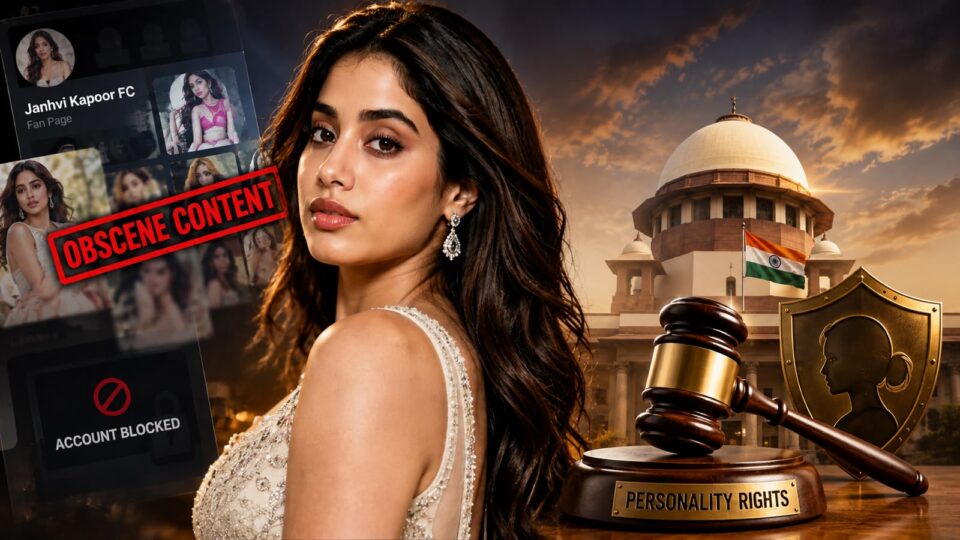
Janhvi Kapoor wins protection from obscene and AI-generated content as Delhi High Court orders takedowns, but refuses blanket restrictions on fan pages, citing important free speech concerns online.
WEBDESK – ABDULLAH FARHAD – SHARJAH NEWS
Janhvi Kapoor Gets Relief From Obscene AI Content as Delhi High Court Rejects Blanket Ban on Fan Pages
Bollywood actress Janhvi Kapoor has received significant legal relief from the Delhi High Court after approaching the court over allegedly obscene, pornographic, AI-generated and misleading content circulating online in her name and likeness. However, while the court agreed that clearly obscene material and commercial misuse should be removed, it stopped short of granting a blanket ban on all fan pages connected with the actress.
What Exactly Happened?
Janhvi Kapoor moved the Delhi High Court seeking protection of her personality and publicity rights. Her legal team raised concerns about multiple online accounts, websites and social-media pages allegedly using her name, photographs and likeness without authorization.
The complaint reportedly covered thousands of URLs. During the hearing, the court noted that the number had reached 6,884 URLs, raising concerns about whether such a broad request could be dealt with through one blanket injunction.
According to Kapoor’s lawyers, some of the material included pornographic and obscene content, fake profiles, impersonation accounts, allegedly AI-generated images and deepfakes. They also alleged that some accounts were commercially exploiting her identity and likeness.
Delhi High Court Orders Action Against Obscene Content
The court made an important distinction between genuinely objectionable material and ordinary online activity involving a celebrity.
Justice Anup Jairam Bhambhani indicated that clearly obscene, pornographic or otherwise egregious material could be ordered to be taken down. The court also indicated protection where Kapoor’s personality was being directly exploited commercially, including through unauthorized merchandise or services.
This means Janhvi Kapoor has received meaningful protection against the specific types of online content that allegedly misuse or sexualize her identity.
Reports on the hearing also state that the court’s intervention covers allegedly fake and AI-generated material involving the actress.
But the Court Refuses to Ban All Fan Pages
The more controversial part of the hearing came when Kapoor’s legal team sought broader restrictions against fan pages and other online accounts.
The court questioned whether every fan page could be treated as an infringement of Janhvi Kapoor’s personality rights. Justice Bhambhani reportedly asked how all fan clubs could simply be shut down and questioned where the legal line should be drawn between legitimate fan activity, criticism, satire and unlawful exploitation.
The court’s position was that being a public figure does not automatically mean every piece of content involving that person can be removed from the internet.
Free Speech Becomes a Major Issue
The hearing therefore developed into a broader discussion about the balance between celebrity personality rights and freedom of expression.
The court expressed concern that personality-rights claims could potentially become too broad and interfere with legitimate speech. It questioned whether criticism of an actor’s work or ordinary fan activity should be treated in the same way as obscene content or commercial exploitation.
Economic Times reported that the court warned the concept of personality rights was “going out of hand” as an increasing number of public figures seek protection over their names, images and identities.
Why the Case Is Important?
Janhvi Kapoor’s case is significant because AI technology has made it increasingly easy to create realistic fake images and videos of public figures.
The case therefore goes beyond Bollywood gossip. It raises important questions about how celebrities can protect their identities online while ensuring that legitimate fan communities, criticism and free expression are not unnecessarily restricted.
The court appears to be taking a middle-ground approach: clearly obscene material and direct commercial exploitation can be targeted, but a celebrity’s personality rights cannot automatically become a tool for removing everything posted about them.
What Happens Next?
The Delhi High Court has asked Kapoor’s legal team to categorize the URLs rather than seeking one blanket order covering thousands of links. The case is expected to continue, with the court examining the different categories of allegedly infringing content individually.
For Janhvi Kapoor, the development represents a significant victory against obscene and allegedly AI-generated misuse of her identity. However, the court’s refusal to impose a blanket ban on fan pages makes the case equally important from a free-speech perspective.
The final outcome could potentially influence how Indian courts handle similar personality-rights disputes involving celebrities and AI-generated content in the future.