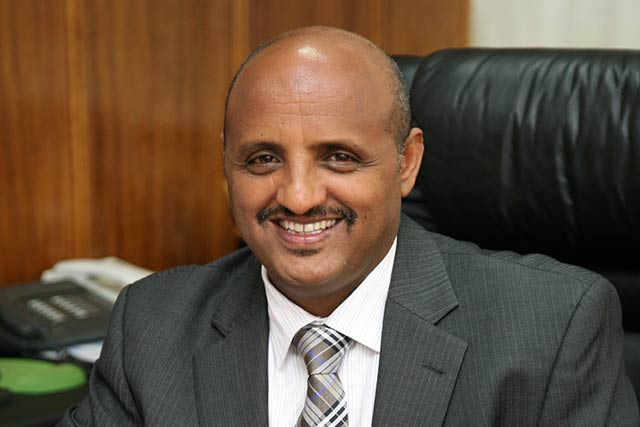
Tewolde Gebremariam turned Ethiopian Airlines from a $1 billion carrier with 33 planes into a $5 billion giant with 130 aircraft — now he leads Air India’s 220-plane fleet while PIA struggles with just 33 aircraft.
By Imran Malik | Aviation & Business Desk | MediaBites.com.pk
When Pakistan announced on July 12, 2026 that it had selected Tewolde Gebremariam as PIA’s new CEO, aviation insiders celebrated. Here was a man who had performed one of the most extraordinary airline transformations in aviation history.
Three weeks later, Air India announced the same man as its new CEO and Managing Director.
Pakistan chose him. India got him.
To understand why this matters so deeply, you need to understand what Tewolde Gebremariam actually achieved — and then compare three airlines that tell a story of what vision, investment, and leadership can accomplish.
Tewolde Gebremariam — The Man Who Built Africa’s Aviation Giant
Born: Ethiopia
Education: Economics degree, Addis Ababa University. MBA, The Open University. Honorary Doctorate, Addis Ababa University (2019)
Ethiopian Airlines CEO tenure: 2011 to March 2022 — over a decade
When Tewolde took charge of Ethiopian Airlines in 2011, he inherited a respectable but regional African carrier. What he built over the next decade is one of aviation’s most studied transformation stories.
Under his leadership, Ethiopian Airlines grew from a $1 billion annual turnover to $4.5 billion, from 33 airplanes to 130 airplanes, and from 3 million passengers to 12 million passengers before COVID.
The airline’s revenue reached $5 billion in the 2021/22 fiscal year, with profit surging 90 percent despite the global pandemic and rising fuel costs.
During his tenure as CEO of Ethiopian Airlines Group for more than a decade, he spearheaded a multi-billion-dollar expansion, transforming a regional carrier into Africa’s largest, most profitable and decorated airline group, simultaneously growing revenue by more than fourfold and fleet size nearly threefold.
He also built infrastructure worth over $700 million, including Africa’s biggest hotel, cargo terminals, MRO hangars, an Aviation Academy, and full flight simulators — turning Addis Ababa into one of Africa’s most important aviation hubs.
He steered Ethiopian Airlines through the devastating 2019 Boeing 737 MAX crash — one of aviation’s most severe crises — maintaining the carrier’s operational integrity and global reputation.
Ethiopian Airlines Under Tewolde — The Numbers
| Metric | When He Started (2011) | When He Left (2022) |
|---|---|---|
| Annual Revenue | $1 billion | $5 billion |
| Fleet Size | 33 aircraft | 130 aircraft |
| Passengers | 3 million | 12 million |
| Destinations | 76 | 127 plus |
| Profit trend | Regional carrier | Africa’s most profitable airline |
His US Carrier Connection
Tewolde Gebremariam built and maintained one of Ethiopian Airlines’ most strategically important partnerships — a deep relationship with United Airlines. Ethiopian Airlines and United have maintained a significant codeshare agreement covering transatlantic routes, giving Ethiopian passengers seamless connections through United’s North American network. This partnership was central to Tewolde’s strategy of making Addis Ababa a genuine global transit hub — connecting Africa to North America through Ethiopian’s network rather than routing passengers through European hubs.
Air India — What Tewolde Now Leads
Air India operates approximately 220 aircraft as of June 2026, with a fleet composed of Boeing 777, Boeing 787, Airbus A350, A321neo and A320neo. The primary hub is Delhi.
Air India is a member of Star Alliance — giving it codeshare relationships and frequent flyer reciprocity across the world’s largest airline alliance network.
Under Tata Group ownership since 2022, Air India has undergone significant transformation — fleet modernization, merger with Vistara, corporate governance reforms, and international route expansion. N Chandrasekaran, Chairman of Tata Sons and Air India, said Gebremariam’s record of building one of the world’s most efficient and profitable airline groups made him uniquely suited to lead Air India’s next phase of execution and expansion.
Air India highlighted his expertise in expanding long-haul international networks, improving operational reliability, maintaining high safety standards and delivering sustained profitability.
PIA — What Pakistan Has
Arif Habib, chairman of the Arif Habib Consortium, which owns PIA, said the national flag carrier currently has 30 aircraft, of which 18 are operational, with five to six requiring repair and maintenance. The long-term target is to expand the fleet to 60 aircraft.
The current fleet stands at around 32 aircraft, including Boeing 777s for long-haul routes and Airbus A320s for regional services, alongside ATR turboprops for shorter domestic connections.
PIA serves approximately 50 destinations with a workforce of 6,500 employees. Revenue stands at approximately Rs200 billion (USD 720 million) in 2025.
The Three Airlines — Head-to-Head Comparison
| Metric | Ethiopian (Tewolde era peak) | Air India (2026) | PIA (2026) |
|---|---|---|---|
| Fleet size | 130 aircraft | 220 aircraft | 33 aircraft |
| Annual revenue | $5 billion | Estimated $4 to 5 billion | $720 million |
| Destinations | 127 plus | 100 plus | 50 |
| Profitability | Highly profitable | Turnaround in progress | Historically loss-making, new owners |
| Alliance | Star Alliance member | Star Alliance member | None |
| Ownership | Ethiopian government | Tata Group (private) | Arif Habib Consortium (private) |
| Hub status | Major global hub | Major global hub | Regional |
What Pakistan Lost — And What India Gained
The contrast is uncomfortable for Pakistan but important to state honestly.
Air India is giving Tewolde a 220-aircraft platform, a Tata Group ownership structure with deep pockets, Star Alliance membership, and an Indian economy growing at 6 to 7% annually that generates enormous domestic and international travel demand.
PIA was offering him a 33-aircraft fleet, Rs180 billion in committed investment, a privatization that is still in its early stages, and the challenge of rebuilding an airline that has been loss-making for years under government ownership.
Both are genuine turnaround challenges. But they are not equivalent opportunities. And Tewolde — one of the world’s most experienced aviation executives — has made his choice.
The lesson for Pakistan is not simply that it lost a CEO. It is that attracting and retaining world-class talent requires competitive packages, operational certainty, and the kind of institutional credibility that comes only from consistent and transparent governance.
PIA’s Rs180 billion turnaround is still possible. But it now needs to find a new leader with the same caliber as the man who just chose Air India instead.