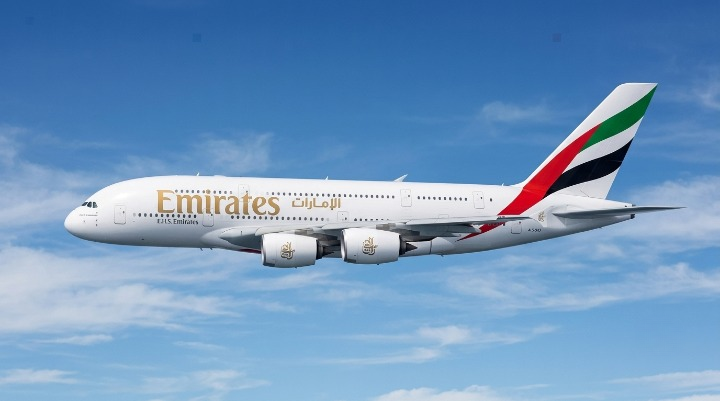
Emirates maintains stable Berlin flight capacity despite Middle East tensions, driven by strong travel demand, expat mobility, and steady Europe–UAE connectivity supporting business and tourism travel growth.
WEBDESK – SHARJAH NEWS
Strong Berlin Demand Keeps Emirates Flights Steady Despite Regional Tensions
Hook
Despite ongoing Middle East tensions, Emirates continues to see strong travel demand on its Berlin route and is maintaining flight capacity without cuts.
The decision signals confidence in long-haul travel recovery and Europe–Gulf connectivity.
Core News (Facts Only)
Emirates has confirmed steady demand on its Dubai–Berlin route and is keeping its flight capacity unchanged.
The airline is continuing operations despite regional geopolitical tensions affecting parts of the Middle East aviation corridor.
Berlin remains a high-demand European destination for both tourism and business travel, supporting stable passenger loads on the route.
Expat Impact Angle
For expatriates living in Germany and the UAE, this stability means fewer disruptions in travel plans. Families, students, and professionals can continue planning visits between Europe and the Gulf without major schedule reductions.
Many expats rely on predictable Dubai–Berlin connections for work rotations and family travel, making this consistency especially important.
Money / Market Angle
Stable capacity helps keep ticket prices from spiking sharply, even during regional uncertainty. Airlines maintaining routes despite geopolitical pressure often help balance fare volatility.
For frequent flyers and business travelers, this means more predictable travel budgets and fewer last-minute premium fare surges.
It also signals that premium Europe–UAE routes remain financially strong and commercially viable.
UAE Strategy Angle
Emirates maintaining its Berlin operations reflects the UAE aviation sector’s broader strategy: protect key international routes even during regional instability.
Dubai’s aviation model depends heavily on long-haul connectivity, and maintaining European demand routes is central to sustaining global hub dominance.
Human Angle
For a Pakistani expat working in Berlin or Dubai, this stability means reassurance. Travel plans for weddings, family emergencies, or long-awaited home visits don’t suddenly become uncertain.
A single cancelled route or reduced frequency can disrupt months of planning—so consistent flights bring emotional relief, not just convenience.
What It Means
For travelers, this is a sign of reliability in an otherwise uncertain regional environment.
For expats, it means continued access between Europe and the Gulf without major disruptions.
For the market, it reinforces that demand—not conflict headlines—is still driving aviation decisions.
Future Impact
If demand remains strong, airlines like Emirates are likely to keep European routes stable or even expand frequencies.
Long-term, Gulf carriers may strengthen their Europe networks further as global travel demand continues to normalize.
However, any escalation in regional tensions could still influence route planning and insurance costs for airlines.
Closing Insight
Even amid geopolitical uncertainty, strong travel demand is proving powerful enough to keep major international routes like Dubai–Berlin firmly in the air.