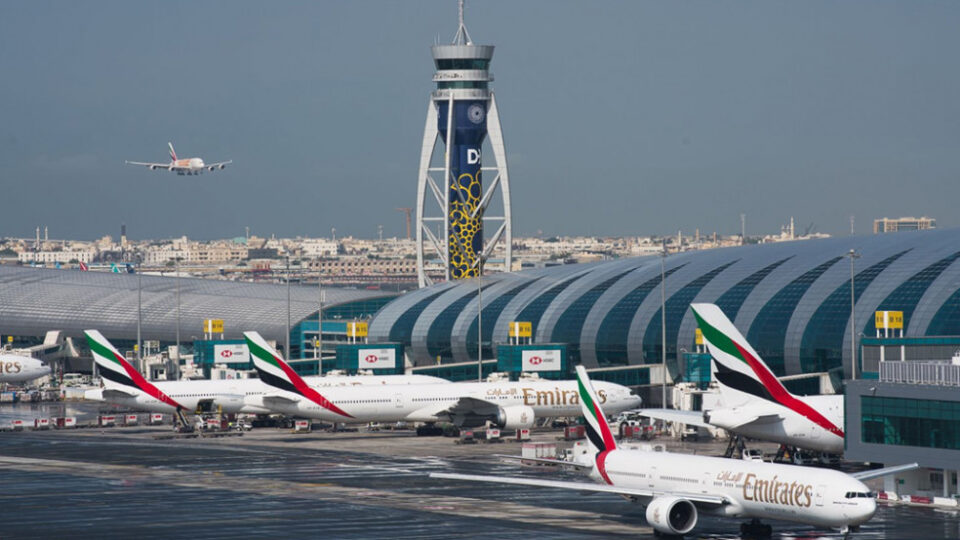
Dubai International Airport expects to handle about 70 million passengers in 2026 despite a sharp second-quarter decline, with CEO Paul Griffiths confident DXB will remain the world’s busiest international airport.
WEBDESK – SHARJAH NEWS
Dubai Airports CEO Paul Griffiths has vowed that Dubai International Airport will retain its position at the top of global aviation despite a challenging year marked by regional uncertainty and disruptions to airline networks.
Griffiths said DXB, which has held its position as the world’s busiest international airport for 12 years, would not surrender its crown despite a significant decline in passenger traffic during the second quarter.
“We’ve been 12 years as No. 1 and I’m not going to lose that crown to anyone else,” Griffiths said.
Dubai International Airport is forecast to handle around 70 million passengers by the end of 2026, compared with a record 95.2 million passengers in 2025.
Passenger volumes fell 42% during the second quarter as regional tensions and disruptions affected aviation networks across the Middle East. However, Griffiths said the figures from the first half of the year should not be viewed as an indicator of DXB’s long-term strength.
“You can’t take the first six months as an indicator of long-term strength,” he said, pointing to Dubai’s global location, extensive airline network and importance as an international transit hub.
According to Griffiths, DXB has already recovered to around 86% of its previous capacity, with the gap between current traffic and last year’s levels narrowing each week.
He said Emirates, Dubai’s flagship airline, is expected to restore about 90% of its capacity, while he remains optimistic that airline schedules could return to normal by the end of the third quarter.
“I’m pretty confident by the end of Q3 we’ll have a full schedule, have all the airlines back,” Griffiths said.
He also said Dubai Airports could reach the long-awaited milestone of 100 million annual passengers within approximately 18 months, provided the recovery continues.
Dubai Airports is also pursuing discussions with major international carriers to encourage new services to both DXB and Al Maktoum International Airport, also known as DWC.
The expansion of long-range narrow-body aircraft, including the Airbus A321 XLR, could create new opportunities by making it economically viable for airlines to connect Dubai with cities that previously required larger wide-body aircraft.
India, Saudi Arabia and the United Kingdom continue to rank among DXB’s most important passenger markets.
Griffiths’ comments came as Dubai pushes ahead with major long-term aviation infrastructure plans, including billions of dollars in contracts linked to the expansion of Al Maktoum International Airport.
Despite the difficult start to the year, Griffiths said he expects Dubai’s aviation sector to return to a steady growth trajectory in the coming months.
The outlook, he said, remains ambitious: restore full schedules, rebuild passenger volumes and ensure DXB continues to hold its position as one of the world’s most important international aviation hubs.