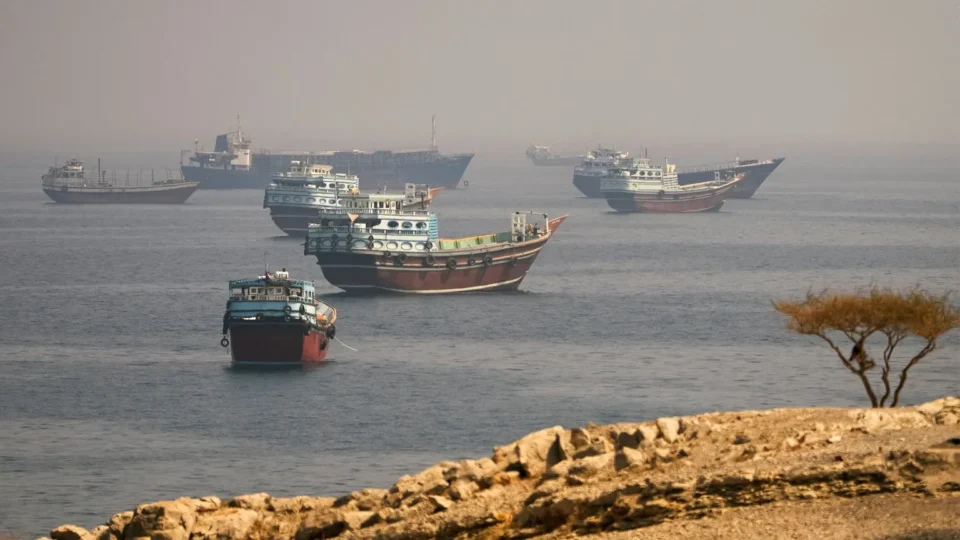
Two Filipino crew members were killed after a Saudi oil tanker was struck in the Strait of Hormuz, as escalating conflict disrupted shipping and pushed oil prices to $95 a barrel.
Two Filipino crew members were killed in an attack on a Saudi vessel in the Strait of Hormuz, shipping company Bahri said on Wednesday, as renewed conflict in the region further disrupted one of the world’s most important energy corridors.
The Saudi shipping company said its vessel, Sidr, was attacked while crossing the Strait of Hormuz at about 11:40pm on Monday.
Bahri confirmed the deaths of the two Filipino crew members and said it remained in continuous contact with the vessel while coordinating with relevant authorities and maritime industry stakeholders.
The company said it continued to closely monitor developments and remained committed to operating under high standards of safety, security and environmental protection.
The incident comes amid growing risks for commercial shipping in the Gulf, where thousands of seafarers have faced heightened uncertainty since the conflict began on February 28.
According to figures cited by the International Maritime Organization, at least 70 attacks on ships had been verified by August 28, with 19 seafarers killed. Up to 400 ships carrying about 6,000 crew members have reportedly been unable to depart safely during the six-month crisis.
IMO Secretary-General Arsenio Dominguez warned that the disruption was creating serious consequences for global supply chains, including the movement of fuels, fertilisers and other commodities.
Shipping activity through the Strait of Hormuz has fallen sharply in recent days amid renewed fighting between the United States and Iran.
Initial Kpler data showed only five non-container vessels crossed the waterway on Tuesday, compared with 10 on Monday, seven on Sunday and nine on Saturday. The figures were significantly below the levels recorded the previous week.
The Strait of Hormuz is a critical global energy route through which around a fifth of global oil exports passed before the conflict disrupted shipping.
Oil prices climbed to around $95 per barrel as concerns intensified over potential supply disruptions and the growing risks facing tankers in the Gulf.
Sidr is a very large crude carrier, or VLCC, built in 2019. Bahri is one of the world’s largest owners of VLCCs and operates a fleet of more than 100 vessels.
Saudi Arabia has increasingly relied on alternative export routes, including shipments through the Red Sea via the Bab Al Mandeb, after risks in the Strait of Hormuz intensified.
However, threats to Red Sea shipping have also complicated Saudi exports, with a Saudi-owned tanker attacked in the Red Sea in July, causing a fire but leaving its crew unharmed.
Saudi Aramco has meanwhile been studying options to expand its East-West pipeline and develop additional export routes as regional instability exposes the vulnerability of key maritime chokepoints.