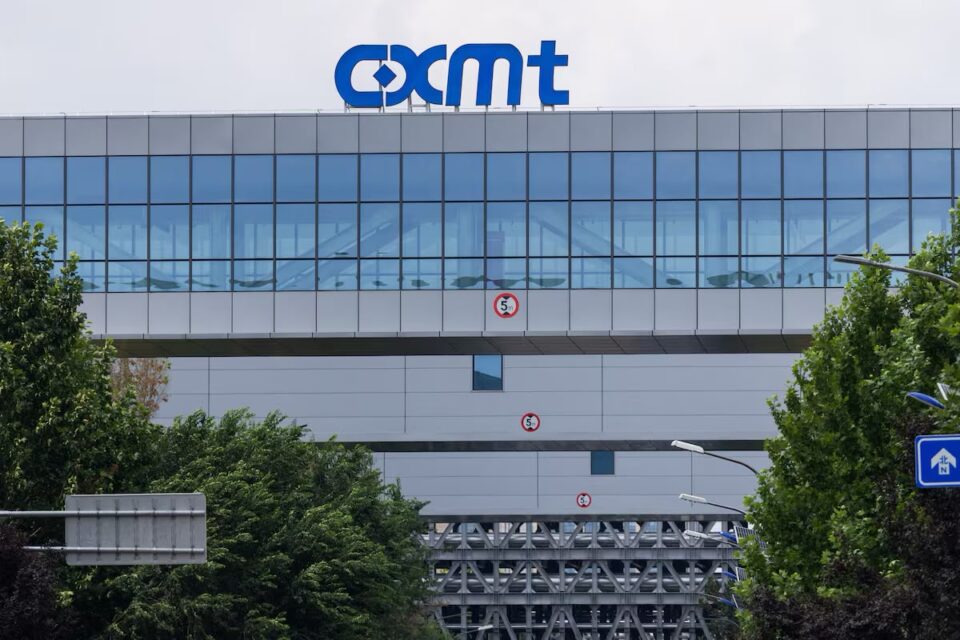
China’s CXMT plans a second Beijing DRAM factory, boosting AI chip production as the country accelerates semiconductor self-reliance and intensifies competition with global memory-chip manufacturers.
WEBDESK – ABDULLAH FARHAD – SHARJAH NEWS
CXMT Announces Major Expansion
China’s leading memory-chip manufacturer, ChangXin Memory Technologies (CXMT), is planning to build a second semiconductor manufacturing plant in Beijing as part of its ambitious expansion strategy. According to Reuters, the project is currently in the early planning stage, with the company discussing funding arrangements with the Beijing Economic-Technological Development Area and other state-backed investors.
The planned factory will manufacture DRAM (Dynamic Random-Access Memory) chips, a critical component used in artificial intelligence (AI) servers, smartphones, laptops, data centers and numerous consumer electronic devices. The move comes only days after CXMT completed Asia’s largest semiconductor initial public offering (IPO), further strengthening its financial position for expansion.
Why This Expansion Matters
Demand for memory chips has surged worldwide due to the rapid growth of artificial intelligence. AI systems require enormous amounts of high-speed memory to process and store data efficiently.
As countries invest heavily in AI infrastructure, memory-chip manufacturers have become increasingly important. Companies such as Samsung Electronics, SK Hynix and Micron currently dominate the global DRAM market. However, China has been working aggressively to reduce its dependence on foreign semiconductor suppliers.
CXMT’s new Beijing facility is expected to become another important step in China’s long-term strategy to strengthen domestic semiconductor manufacturing and improve technological self-reliance.
What Exactly Happened?
According to Reuters, CXMT is seeking funding support for the new plant from government-backed investment partners in Beijing. Although the project has not yet received final approval, discussions are underway regarding financing and construction plans.
The proposed facility would become CXMT’s fourth DRAM manufacturing plant. The company currently operates two production plants in Hefei and one in Beijing, each capable of producing around 100,000 semiconductor wafers per month.
If the Beijing expansion, along with previously announced projects in Shanghai and Hefei, is completed as planned, CXMT’s manufacturing capacity could more than double over the next few years. This would significantly strengthen China’s domestic memory-chip production capabilities.
Part of China’s Semiconductor Strategy
The expansion reflects China’s broader effort to become more self-sufficient in advanced technologies despite export restrictions imposed by the United States and its allies.
For years, China has invested billions of dollars in semiconductor research, manufacturing facilities and local technology companies. Government-backed funding has played a major role in helping domestic firms compete with established international chipmakers.
Industry analysts say CXMT has become one of China’s most strategically important technology companies because DRAM chips are essential for AI systems, cloud computing, high-performance computing and consumer electronics.
The new Beijing project demonstrates that China continues to prioritize semiconductor development despite ongoing geopolitical and trade tensions.
Market Reaction
The announcement attracted significant attention across global financial markets.
Investors view CXMT as one of China’s fastest-growing semiconductor companies following its record-breaking IPO. Reports that the company plans another major production facility reinforced expectations that China will continue investing heavily in advanced chip manufacturing.
At the same time, the expansion has increased competitive pressure on global memory-chip leaders including Samsung Electronics, SK Hynix and Micron, which together still control the vast majority of the international DRAM market.
Analysts note that although CXMT remains smaller than these established companies, its rapid expansion could reshape competition over the coming years.
Global Significance
The announcement is important not only for China but also for the global technology industry.
Memory chips are a critical component in nearly every modern computing device, from smartphones and personal computers to AI data centers. As AI adoption accelerates worldwide, securing reliable memory-chip production has become a strategic priority for governments and technology companies alike.
CXMT’s expansion reflects how semiconductor manufacturing is increasingly viewed as a matter of economic competitiveness and national security, rather than simply industrial growth.
CXMT’s plan to construct a second DRAM manufacturing plant in Beijing represents another major milestone in China’s effort to become a global semiconductor powerhouse. Backed by government investment and strong demand driven by artificial intelligence, the company is expanding rapidly after its record IPO.
Although the project remains in the planning stage, it signals China’s continued commitment to strengthening its domestic chip industry and challenging the long-standing dominance of international memory-chip manufacturers. As AI demand continues to grow, developments like this are expected to play an increasingly important role in shaping the future of the global semiconductor market.