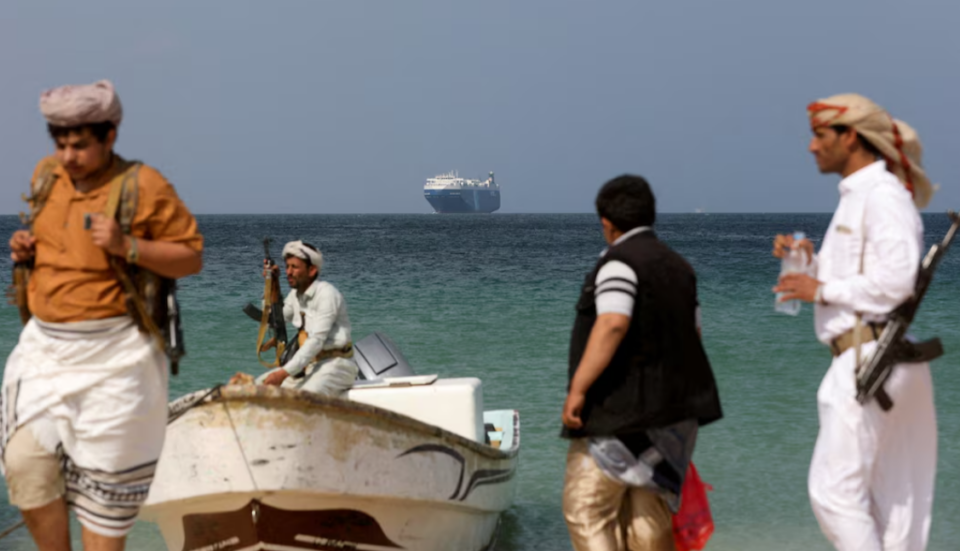
Yemen’s Houthi rebels say they struck two Saudi oil tankers in the Red Sea, escalating regional tensions and heightening concerns over global shipping, energy supplies and trade.
WEBDESK – SHARJAH NEWS
Yemen’s Iran-backed Houthi movement has claimed responsibility for missile and drone attacks on two Saudi oil tankers in the Red Sea, marking a significant escalation in regional maritime tensions and renewing concerns over the security of one of the world’s busiest shipping routes.
According to a statement published on the group’s Telegram channel on Thursday, the Houthis said they targeted the Saudi oil tankers Encelia and Layla, alleging the vessels had violated what the group described as its maritime blockade against Saudi Arabia.
The claim came a day after the United Kingdom Maritime Trade Operations (UKMTO), a British naval security monitoring agency, reported that an unidentified projectile struck a tanker sailing off Saudi Arabia’s Red Sea coast.
UKMTO said the projectile caused a fire onboard the vessel, with crew members working to bring the blaze under control. The agency did not identify the tanker or attribute responsibility for the attack.
The Houthis announced earlier this week that they were imposing a maritime embargo on Saudi Arabia, saying the move was retaliation for what they described as the kingdom’s blockade of Yemen and a recent attack on Sanaa International Airport.
The latest incident adds to growing instability in the Red Sea, a strategic waterway that has become increasingly vulnerable to attacks amid widening regional conflict. The Houthis have repeatedly targeted commercial shipping over the past several years, disrupting international trade and prompting increased naval patrols by international forces.
The Red Sea and the Bab el-Mandeb Strait serve as one of the world’s most critical maritime corridors. Around 12% of global trade passes through the route, while approximately one-quarter of global container traffic transits the narrow 32-kilometre-wide passage connecting the Red Sea to the Gulf of Aden before reaching the Suez Canal.
Any prolonged disruption could have far-reaching economic consequences. Shipping companies may be forced to reroute vessels around South Africa’s Cape of Good Hope, adding up to three weeks to voyages between Asia and Europe while significantly increasing fuel consumption, insurance costs and freight rates.
Maritime tracking data indicates that at least nine tankers have already altered their routes following the Houthi announcement. Among them were three vessels that had loaded crude oil from Saudi Arabia’s Yanbu export terminal on the Red Sea coast.
The attacks come at a time of heightened regional tensions, with concerns growing that continued hostilities could further disrupt global energy markets and international supply chains.
No immediate response from Saudi authorities regarding the Houthi claims had been reported at the time of publication. Independent verification of the group’s claims was not immediately available.