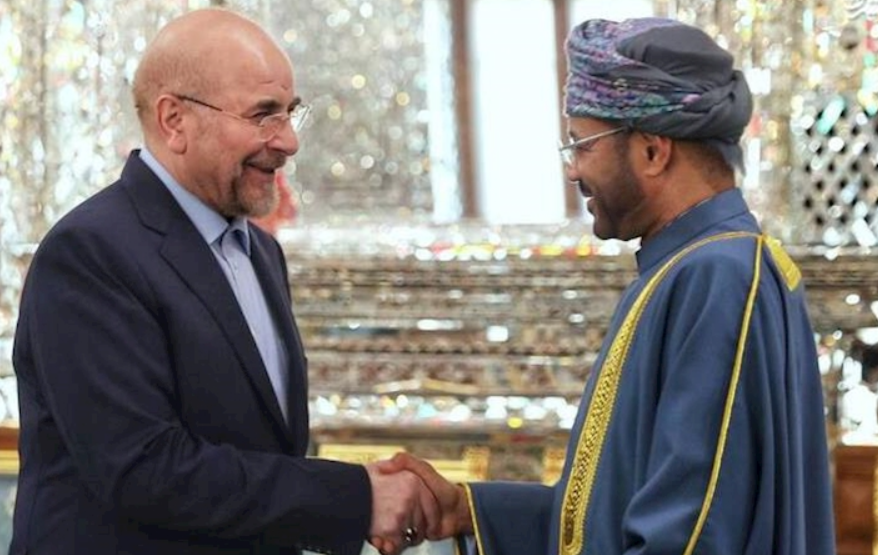
Iran has strongly reacted to Oman’s announcement of a new shipping route in the Strait of Hormuz, calling the move “unacceptable” and “extremely dangerous” amid rising regional tensions over control of global energy corridors.
WEBDESK – SHARAJAH NEWS
Fresh tensions have erupted in the Gulf after Iran’s powerful Revolutionary Guards accused Oman of unilaterally announcing a new maritime passage for ships in the Strait of Hormuz without consulting Tehran.
The dispute has exposed growing geopolitical friction over one of the world’s most strategically important waterways, through which nearly 20 percent of global oil and gas supplies pass every day.
In a strongly worded statement, Iran’s Islamic Revolutionary Guard Corps (IRGC) said Oman’s decision to establish a “safe shipping corridor” in the Strait of Hormuz was made without coordination or information-sharing with Iran.
Iran described the move as “unacceptable” and “extremely dangerous,” warning that future management of the waterway would not return to the pre-war status quo.
The sharp remarks came just hours before Iranian Foreign Minister Abbas Araghchi held an important phone conversation with his Omani counterpart بدر البوسعیدی to discuss maritime traffic and temporary 60-day arrangements in the Strait of Hormuz.
According to Iranian media, Oman recently announced plans for an alternative secure maritime route to ensure uninterrupted shipping through the strait amid recent regional instability and military tensions.
The announcement reportedly came after Iranian parliament speaker and chief negotiator Mohammad Bagher Ghalibaf visited Oman alongside Araghchi to discuss Hormuz security and regional developments with the Sultan of Oman.
Analysts believe Iran’s anger is primarily directed at what Tehran sees as Oman’s unilateral handling of a sensitive international waterway jointly bordering both countries.
Iran has insisted it is working on a new coordinated system for managing vessel traffic through the strait in consultation with Oman. However, Tehran has also signaled that its strategic approach to the Strait of Hormuz has permanently changed following the recent conflict in the region.
Meanwhile, Gulf countries and Western allies continue to stress that maritime navigation in the Strait of Hormuz must remain open under international law and free from political or military interference.
UAE presidential adviser Anwar Gargash warned on social media platform X that “imposing realities through aggression does not bring stability but creates future conflicts,” in comments widely interpreted as directed toward Iran’s position on Hormuz.
The issue was also discussed during a Gulf Cooperation Council meeting in Bahrain attended by US Secretary of State Marco Rubio.
Rubio emphasized that international waterways “do not belong to any single country,” warning that violating this principle could create “global chaos.”
The Strait of Hormuz remains one of the world’s most sensitive geopolitical flashpoints, linking the Persian Gulf to the Arabian Sea and serving as a lifeline for global energy markets.