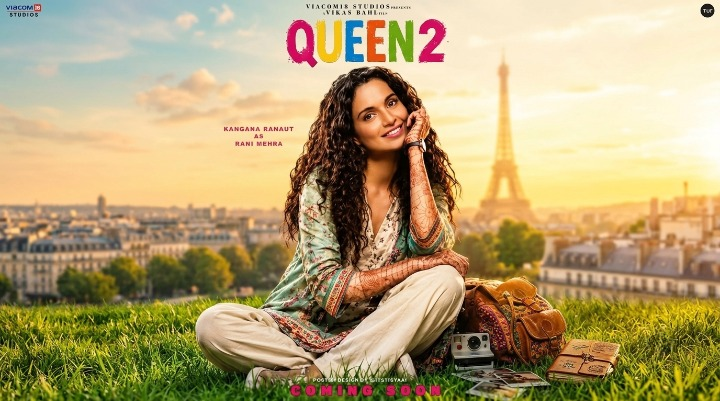
JioStar has denied Phantom Studios’ ₹250 crore copyright claims, insisting Queen 2 is an original film as the legal battle over Kangana Ranaut’s project intensifies.
WEBDESK – SHARJAH NEWS
Studio Rejects Copyright Allegations
JioStar has responded publicly to the legal dispute surrounding Queen 2, firmly denying allegations that the upcoming Kangana Ranaut film violates the intellectual property rights of the 2014 blockbuster Queen.
The statement comes after Phantom Studios filed a ₹250 crore lawsuit in the Bombay High Court, alleging that the project makes unauthorized use of the Queen franchise. JioStar, however, insists the film has been developed independently and bears no creative connection to the original.
JioStar Insists the Film Is Not a Sequel
According to the production house, Queen 2 is based on an entirely new script and should not be mistaken for a continuation of the earlier film.
The company said the project does not reuse the original storyline, characters or narrative and has been conceived as a standalone film. It also clarified that the movie is neither a sequel nor a prequel, but an original story created independently.
Legal Battle Centers on Intellectual Property
The dispute began when Phantom Studios claimed that JioStar had proceeded with the project without securing the necessary permissions.
The studio maintains that it owns a 50 percent stake in the intellectual property associated with Queen and argues that no approval was granted for any sequel, remake or derivative work. It has asked the Bombay High Court to halt the film’s release while seeking ₹250 crore in damages.
Production House Challenges the Objection
JioStar has also questioned Phantom Studios’ objections to the film’s title.
The company argued that the word “Queen” is a common English term that cannot be exclusively owned by any one entity. According to its statement, simply using the word in a title does not amount to copyright infringement.
The studio added that it is confident its legal position is strong and intends to defend the project through the judicial process.
A Film That Left a Lasting Legacy
Released in 2014, Queen became one of Bollywood’s most acclaimed films and is widely regarded as a career-defining project for Kangana Ranaut.
Directed by Vikas Bahl, the film followed the journey of a young woman who discovers independence after embarking on her honeymoon alone when her wedding is unexpectedly called off. The movie earned widespread praise from critics and audiences, with Kangana winning the National Award for Best Actress.
The original film was jointly produced by Viacom18 Motion Pictures and Phantom Films, which was later dissolved before re-emerging as Phantom Studios in 2021.
Kangana and Vikas Bahl Reunite
Despite the ongoing legal proceedings, Queen 2 has already completed principal photography and entered post-production.
The film reunites Kangana Ranaut with director Vikas Bahl, a collaboration that has already generated considerable interest among fans of the original movie.
However, the copyright dispute has overshadowed excitement surrounding the project, shifting public attention toward the courtroom rather than the film itself.
Case Could Influence Future Bollywood Projects
Entertainment industry observers believe the lawsuit may have wider implications beyond Queen 2.
The court’s decision could help define how intellectual property rights are interpreted when filmmakers revisit successful titles or create projects with similar branding. Legal experts say the proceedings are expected to focus not only on the title but also on whether the new film shares protected creative elements with the original.
The verdict could become an important reference point for future disputes involving sequels, remakes and franchise rights in Bollywood.
Industry Closely Watching the Proceedings
The legal confrontation has quickly become one of the industry’s biggest talking points.
Filmmakers, producers and legal professionals are closely monitoring the case, which highlights the increasing importance of protecting intellectual property as film franchises continue expanding across theatres and streaming platforms.
With both parties standing firmly by their claims, the matter is now expected to be resolved through the courts.
Uncertainty Remains Over the Film’s Release
For the time being, Queen 2 remains in post-production while the legal process continues.
JioStar continues to maintain that the project is a completely original film created independently, while Phantom Studios argues that it unlawfully builds upon the legacy of the 2014 hit.
Until the Bombay High Court issues further directions, uncertainty surrounding the film’s release is likely to continue. Regardless of the outcome, the dispute has already become one of Bollywood’s most closely watched legal battles, raising broader questions about creative ownership, franchise rights and the future of intellectual property in Indian cinema.