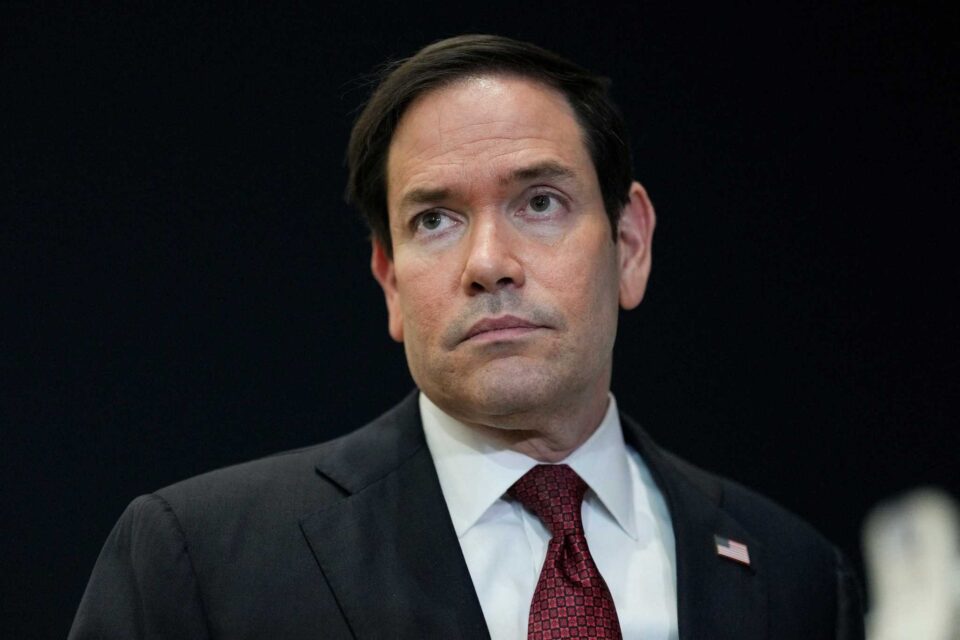
US Secretary of State Marco Rubio arrived in the UAE as Washington intensified diplomatic efforts with Gulf allies, warning Iran against imposing tolls in the strategically vital Strait of Hormuz.
WEBDESK – SHARJAH NEWS
US Secretary of State Marco Rubio arrived in the UAE on Tuesday at the start of a Gulf tour aimed at strengthening regional support for ongoing negotiations between Washington and Tehran over a long-term peace agreement.
Rubio’s visit comes as Iranian officials continue diplomatic talks in Oman, with both sides seeking to reinforce their positions following recent US-Iran discussions held in Switzerland.
Speaking to reporters after arriving in Abu Dhabi, Rubio said his meetings in the Gulf were focused on ensuring regional allies remain fully involved in the negotiation process.
“We’re really here to hear from them more than we are to talk,” Rubio said, adding that the United States wanted to ensure Gulf nations’ perspectives were reflected in any future agreement with Iran.
The US Secretary of State also issued a firm warning regarding the Strait of Hormuz, rejecting any possibility of Iran charging tolls for passage through the critical international waterway.
“It’s an international waterway. No country is allowed to charge tolls or fees on an international waterway,” Rubio stated. “I think all the countries in this region would agree with us.”
Rubio’s comments came shortly after Oman and Iran announced the formation of a joint working group aimed at developing a framework related to the management of the Strait of Hormuz.
The announcement followed high-level meetings in Muscat involving Iranian Parliament Speaker Mohammad Bagher Ghalibaf and Foreign Minister Abbas Araghchi with Oman’s Sultan Haitham and Foreign Minister Badr Al Busaidi.
The first round of renewed US-Iran talks held in Switzerland over the weekend reportedly ended on a positive note, despite conflicting interpretations from both sides regarding the details of the discussions.
Meanwhile, the US Treasury issued General Licence X, providing Iran with a temporary 60-day waiver that allows the sale and delivery of Iranian oil cargoes, including transactions involving US dollar payments.
The waiver, which expires on August 21, also opens the possibility for Iranian oil imports into the United States for the first time in decades and offers Tehran temporary relief as its oil exports remain at their lowest levels in five years.
The International Maritime Organisation also confirmed that the renewed US-Iran dialogue had created an opportunity for discussions on the evacuation of approximately 11,000 stranded seafarers near the Strait of Hormuz.
Qatar’s Prime Minister Sheikh Mohammed bin Abdulrahman welcomed the US-Iran understanding but warned that any escalation elsewhere in the region could negatively impact negotiations.
He also accused Israeli Prime Minister Benjamin Netanyahu of fuelling tensions in the Middle East and called for an immediate end to Israeli occupation in southern Lebanon.
At the same time, Lebanon entered a fifth round of US-led negotiations with Israel, while Iran reportedly seeks to include developments in Lebanon as part of any broader agreement with Washington.
Following his UAE visit, Rubio is expected to travel to Kuwait and Bahrain, where he will meet Gulf foreign ministers to discuss regional security, maritime stability and the future direction of US-Iran negotiations.