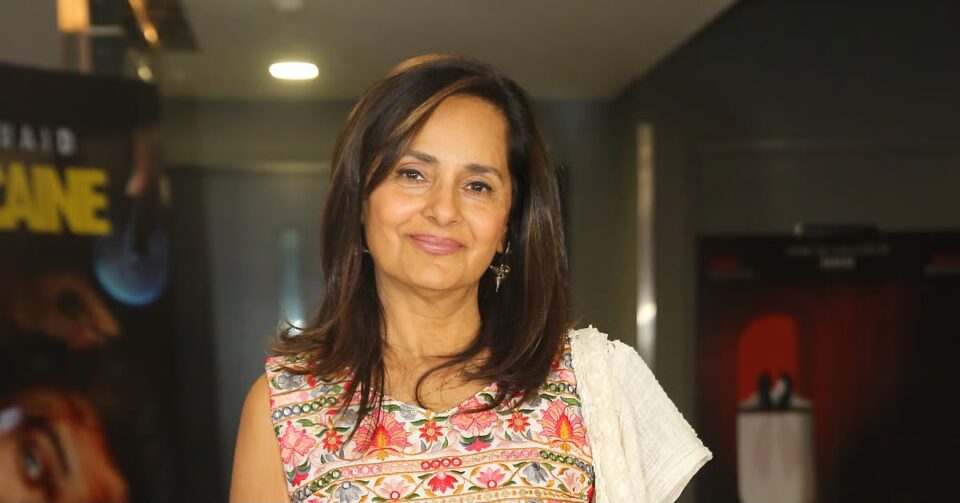
Veteran actress Kitu Gidwani has criticized Bollywood as a “fake industry,” questioning its royalty system, treatment of older actresses and lack of meaningful opportunities.
WEBDESK – ABDULLAH FARHAD – SHARJAH NEWS
Veteran actress Kitu Gidwani has sparked a fresh debate about the way Bollywood treats its performers after describing the Hindi film industry as a “fake industry” and questioning its approach to royalties, intellectual property and opportunities for older women.
Gidwani, who has worked across Hindi cinema and television for more than four decades, made the remarks while discussing the realities of working in the entertainment industry. Her comments have attracted attention because they address issues that extend beyond individual casting decisions and touch on the broader financial and professional structure of Bollywood.
Gidwani Questions Bollywood’s Royalty System
One of Gidwani’s major concerns is the absence of meaningful royalty payments for artists whose work continues to generate value after its original release.
She argued that performers should have stronger rights over the continued commercial exploitation of their work. Her frustration stems from the difference she sees between the Indian entertainment industry and systems in some Western markets, where artists can receive compensation when their work continues to be commercially used.
Gidwani’s argument essentially questions why actors who contributed to successful films or television programmes should necessarily stop benefiting financially once their initial contracts have been completed.
The issue of royalties and intellectual-property rights has been debated in the Indian entertainment industry for years, particularly as older films and television programmes continue to find audiences through television reruns and digital platforms.
Criticism of Roles for Older Actresses
Gidwani also highlighted another long-standing issue: the shortage of substantial roles for older women in Bollywood.
According to her comments, actresses can find themselves facing a sharp reduction in meaningful professional opportunities as they grow older. Instead of being offered complex central characters, many older female performers are frequently limited to supporting roles.
Her criticism reflects a broader conversation about representation and age diversity in Indian cinema.
For Gidwani, the problem is not simply about getting work. It is also about whether the industry creates characters that allow experienced actresses to continue contributing creatively.
Comparing Bollywood With the West
Gidwani contrasted Bollywood’s treatment of older women and artists with entertainment industries in the West.
Her comments suggested that she believes Western industries have developed stronger systems for recognizing the continuing value of performers and creating opportunities for older actresses.
She therefore described Bollywood as operating according to what she considers unclear or inconsistent rules, particularly regarding compensation and professional opportunities.
The remarks have resonated because Gidwani herself has spent decades working in television, films and other forms of performance, giving her criticism the perspective of someone who has experienced the industry’s evolution firsthand.
A Wider Industry Debate
Gidwani’s comments are not simply criticism of one production house or one film. Instead, they raise broader questions about how Bollywood compensates artists and how the industry treats performers as they age.
Her remarks are likely to fuel discussion about whether Indian cinema needs stronger mechanisms for royalty payments, intellectual-property protection and age-inclusive casting.
For now, Gidwani’s comments remain her personal assessment of the industry rather than an official industry-wide finding. However, because she has spent more than 40 years in entertainment, her criticism has added another prominent voice to an ongoing debate about fairness, representation and the long-term rights of performers.