

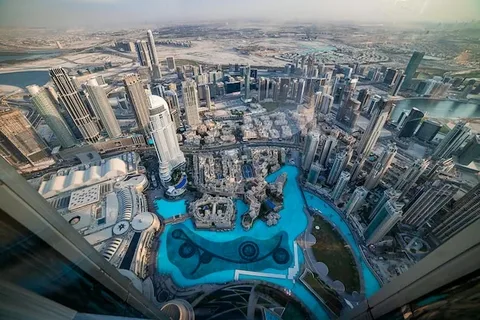
When the Burj Khalifa officially opened its doors on January 4, 2010, the world’s attention turned toward the UAE like never before. Standing at 828 meters, the tallest building in the world wasn’t just an architectural feat — it was a signal to the world that Dubai had arrived.
Fifteen years later, the Burj Khalifa’s influence continues to shape Dubai’s economy, tourism, real estate, and global identity.
A Landmark That Put Dubai on the Global Map
Before the Burj Khalifa, Dubai was already experiencing rapid growth — but the tower gave the city an unmistakable global signature, placing it alongside Paris (Eiffel Tower) and New York (Empire State Building).
Key Global Recognitions:
-
Hosting 20 million tourists annually (pre-pandemic, largely boosted by Burj Khalifa)
-
Becoming a hub of architecture, innovation, and tourism
-
Featuring in Hollywood films, documentaries, and global media
-
Establishing Dubai as a city of records and vertical ambition
Burj Khalifa’s Impact on Dubai Real Estate
The tower transformed the real estate market, making Downtown Dubai one of the most premium addresses in the world.
Key Real Estate Outcomes:
| Impact Area | Transformation Triggered |
|---|---|
| Property Values | Prices surged 30–50% post-opening |
| Luxury Developments | High-end apartments, branded residences (Armani, Emaar) |
| Vertical Living | Popularized high-rise lifestyle in the region |
| Foreign Investment | Attracted buyers from UK, China, India, and Russia |
Burj Khalifa’s Impact on Tourism
The Burj Khalifa became Dubai’s most visited paid attraction. Its observation decks draw millions annually.
Tourism Influence:
-
Boosted footfall to The Dubai Mall (one of the world’s busiest malls)
-
Increased demand for surrounding luxury hotels (Armani, Address Downtown, Palace Downtown)
-
Became a centerpiece for NYE fireworks and global light shows
-
Included in tour packages marketed as “Visit the Tallest Building in the World”
Burj Khalifa plays a key role in Dubai’s tourism revenue, which made up 12% of GDP in 2023.
Cultural Symbolism and National Identity
The Burj Khalifa represents the UAE’s vision, resilience, and ambition.
-
Renamed from Burj Dubai to Burj Khalifa in honor of HH Sheikh Khalifa bin Zayed
-
Became a symbol of recovery post-2008 financial crisis
-
Used for national tributes and solidarity light shows (COVID-19, Palestine, Ramadan)
The tower acts as a vertical flag of the Emirates.
Economic Ripple Effects Across Industries
The Burj Khalifa indirectly stimulated multiple industries:
-
Retail: The Dubai Mall saw unprecedented luxury retail expansion
-
Aviation: Emirates and flydubai benefited from tourist traffic
-
Technology: Inspired smart infrastructure (AI cameras, climate sensors)
-
Construction: Attracted global interest in Middle East mega projects
It became a case study in economic stimulus through architecture.
Smart Infrastructure and Urban Planning
The Burj Khalifa anchored the development of Downtown Dubai into a smart, mixed-use district.
Key Developments:
-
Integrated mobility systems: Metro, EV charging, smart parking
-
AI-powered traffic and surveillance
-
Green initiatives: LEED-certified buildings, sustainability measures
-
IoT-connected public zones monitoring crowd flow, temperature, and lighting
This aligns with the UAE Vision 2031 for digitally governed, sustainable cities.
Frequently Asked Questions (FAQs)
Q1: Is Burj Khalifa still the tallest building in the world?
Yes. As of 2025, it remains the tallest at 828 meters.
Q2: How did Burj Khalifa affect Dubai property prices?
Property prices around Downtown surged 30–50% within five years of its launch.
Q3: Why was Burj Dubai renamed to Burj Khalifa?
It honored HH Sheikh Khalifa bin Zayed, recognizing Abu Dhabi’s financial support.
Q4: What are the top attractions inside Burj Khalifa?
At the Top observation decks, At.mosphere Restaurant, Armani Hotel, and immersive LED shows.
Q5: Has Burj Khalifa helped increase Dubai’s global recognition?
Absolutely. It made Dubai a global icon of ambition and architecture.
Final Thoughts
The Burj Khalifa is more than a building — it’s a symbol of modern Arabia and a blueprint for visionary urbanism.
Its impact on Dubai’s real estate, tourism, and economy has redefined what cities in the region can achieve. With upcoming projects like Dubai Creek Tower, the spirit of the Burj continues to inspire bigger ambitions.
For More Information, Stay Connected With Sharjah News! You Can Also Follow Us On Facebook To Stay Updated.
