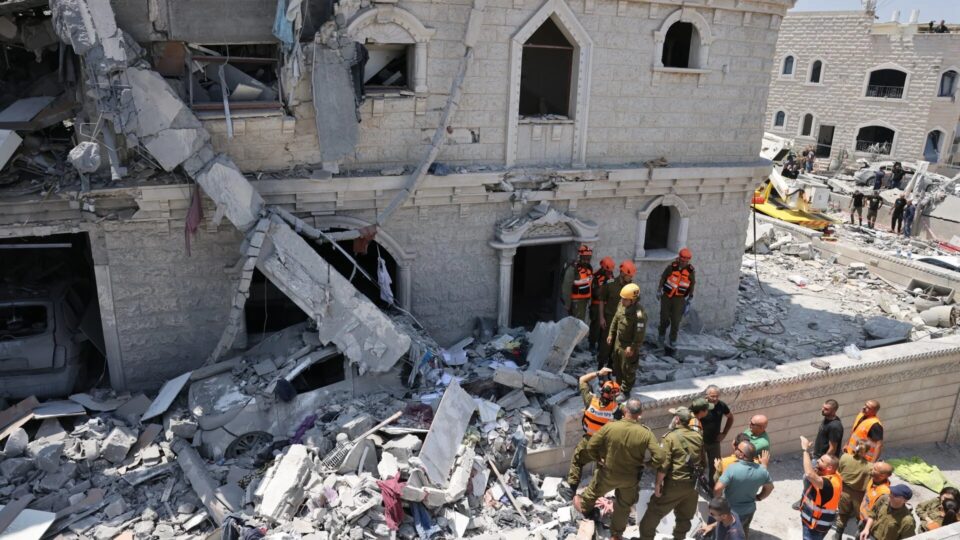
Residents of Arab communities in northern Israel are voicing growing frustration over what they say is a severe shortage of public bomb shelters as rockets and missiles threaten the region during the escalating US-Israel war with Iran. Towns near the Lebanese border have come under increased risk from rocket attacks launched by Iran and its regional allies, forcing civilians to repeatedly seek safety with limited protection.
Local leaders in Arab-majority towns say the lack of shelters leaves thousands of families vulnerable when warning sirens sound. In the northern city of Sakhnin, Mayor Mazen Ghnaim said the government has a responsibility to ensure every community has access to safe shelters during emergencies. Residents complain that many neighborhoods have little or no protective infrastructure despite the ongoing missile threat.
The situation has become more urgent as regional tensions escalate. Rockets and missiles fired toward Israel during the conflict have triggered frequent alerts in northern areas, forcing civilians to rush for cover within seconds. For many Arab towns, however, safe shelters are scarce or located far from residential areas.
Data cited by civil society groups highlights the disparity: out of nearly 12,000 public bomb shelters across Israel, only around 37 are located in Arab municipalities, even though Arab citizens make up a significant share of the country’s population. Critics argue that this gap exposes long-standing inequalities in civil defense infrastructure.
Community activists and volunteers have begun organizing local initiatives to identify safe spaces and share shelter locations online, attempting to fill the gaps during the conflict. However, residents say such efforts cannot replace proper government-built protective systems.
As the regional conflict continues and rocket threats remain high, Arab communities in northern Israel say improving shelter access has become an urgent matter of safety. Many residents are now calling for immediate investment in civil defense infrastructure to ensure equal protection for all civilians living under the threat of war.