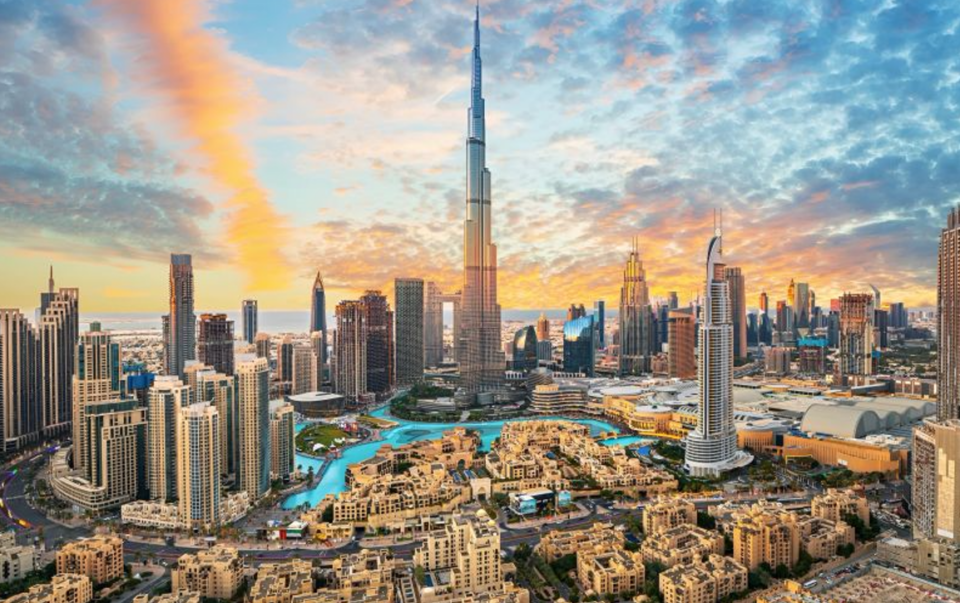
Despite recurring predictions about its decline, Dubai continues to defy critics, attracting record tourists, global investors and thousands of new millionaires while strengthening its position as a global business and aviation hub.
Courtesy: Easa Al Gurg (LinkedIn page)
Every few years, someone predicts the end of Dubai. Every few years, headlines warn of an exodus, instability, or a turning point that could slow the city down.
Yet every few years, the numbers tell a very different story.
The past couple of weeks have reminded us that geopolitics is never theoretical. Tensions across the region, including the ongoing conflict involving Iran, Israel, and the United States, have again sparked debates about the stability of the region.
But what matters most is not the existence of challenges. What matters is how prepared a country is to face them, and how its institutions continue to function through them.
Dubai was never built on the assumption that nothing would go wrong. In fact, it was built precisely because the world is uncertain. A city with limited natural resources transformed itself into one of the most connected hubs on the planet for trade, aviation, finance, tourism, and technology.
While some observers speak about an “exodus,” the latest economic indicators show something entirely different.
According to recent data, the United Arab Emirates attracted around 9,800 new resident millionaires in 2025, the largest net inflow of wealthy individuals worldwide.
Meanwhile, Dubai International Airport handled about 95.2 million passengers in 2025, the highest international passenger traffic ever recorded by any airport globally.
Tourism numbers also continue to surge. Dubai welcomed around 19.6 million international visitors in 2025, maintaining its position among the most visited cities on the planet.
Today, Dubai is home to more than 81,000 resident millionaires, including hundreds of centi-millionaires and billionaires.
The financial sector tells a similar story. The Dubai International Financial Centre now hosts thousands of firms, including hundreds of global banks, hedge funds, wealth managers, and family offices, further cementing Dubai’s role as a leading global financial gateway.
The property sector also continues to show strong momentum. In January 2026 alone, Dubai recorded approximately AED 111 billion in real estate transactions, highlighting sustained global demand for property in the emirate.
Cities experiencing an “exodus” do not attract global capital, global talent and global businesses at record levels.
Perhaps the most important lesson is that Dubai has historically emerged stronger after every global challenge.
Following the Global Financial Crisis of 2008, Dubai’s GDP grew from roughly $109 billion in 2010 to more than $220 billion today.
After the COVID-19 pandemic, tourism rebounded dramatically—from 5.5 million visitors in 2020 to nearly 20 million visitors by 2025.
The city’s population growth tells another part of the story. Dubai’s population has expanded from around 1.9 million in 2010 to more than 3.8 million residents today.
Time and again, moments that many believed would slow Dubai down instead became inflection points for its next phase of growth.
Dubai was never built on the absence of challenges. It was built on the ability to turn them into an opportunity.
And the story of Dubai has never been written by those who doubted it. It has always been written by those who chose to build it and become part of its success.