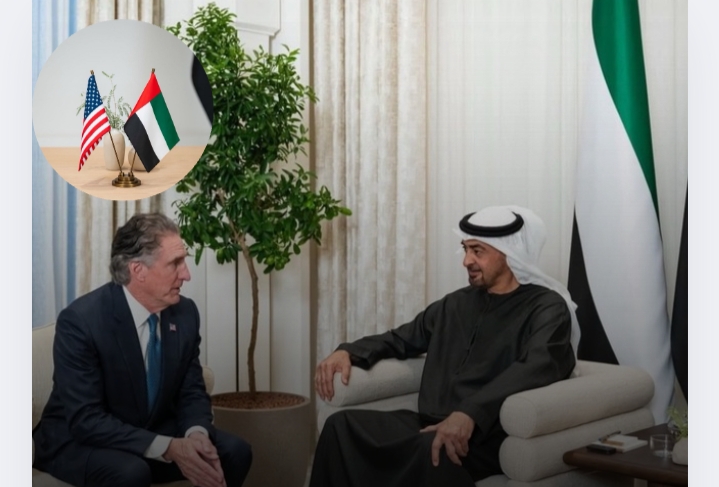
ABU DHABI — The UAE has taken another bold step toward redefining the global energy landscape, signing a landmark Memorandum of Understanding (MoU) with the U.S. National Energy Council during the ADIPEC 2025 Exhibition and Conference, in the presence of Dr. Joe Dugan. The agreement establishes a long-term partnership that integrates artificial intelligence (AI) across energy, manufacturing, and infrastructure — transforming collaboration into what experts are calling “economic engineering for the future.”
A Vision Beyond Energy
Under the strategic direction of HH Sheikh Mohamed bin Zayed Al Nahyan, this alliance cements the UAE’s position as a global energy–AI hub, linking the U.S., Asia, and the Global South. It aligns seamlessly with the nation’s Vision 2031, Operation 300Bn, and Net Zero 2050 goals — redefining how energy is produced, consumed, and optimized through data-driven intelligence.
AI’s integration into the energy sector is projected to cut global CO₂ emissions by 2.4 gigatons by 2030 — equivalent to removing 500 million cars from the roads — while driving global efficiency and productivity.
Why the UAE Leads
With non-oil GDP already at 75%, the UAE is steering toward 85% by 2031, using AI to accelerate diversification, boost energy sovereignty, and strengthen industrial independence. Through Operation 300Bn, AI will enhance productivity by up to 40%, while national clean-energy investments surpass AED 600 billion (US$163 billion).
The Economic Impact
Analysts forecast that this partnership could unlock AED 90 billion (US$24.5 billion) in additional annual output, increase energy productivity by 22%, and reduce carbon emissions by 70 million tons yearly. The collaboration also aims to develop a Sovereign Energy Intelligence Network — a next-generation platform interlinking oil refineries, power grids, and renewable assets.
A Strategic Future
Globally, AI could add US$15.7 trillion to the world economy by 2030. By capturing just 0.5% of that growth, the UAE could add US$75 billion to its GDP — solidifying its position among the world’s most advanced energy economies.
As the UAE redefines the equation of energy and intelligence, its message is clear:
“The future belongs not to those who own the oil, but to those who own the intelligence that powers the world.”
From Abu Dhabi to Washington, the UAE–U.S. Energy–AI Corridor now stands as a blueprint for how nations can merge technology, sustainability, and economic vision to engineer the future of global prosperity.